


Give to Gain: Celebrating Women’s History Month with the Leaders of WIN
EchoStar ERG leaders reflect on Women’s History Month and their mission to inspire women, build community, and evolve culture.
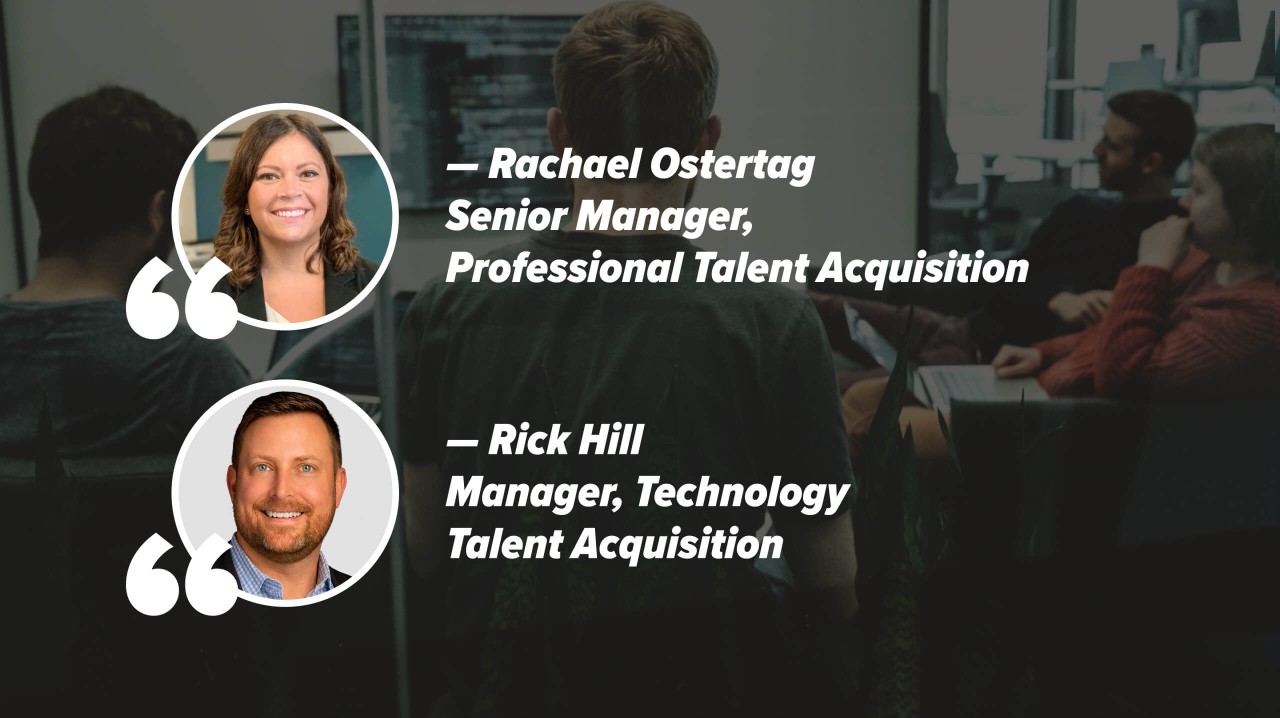
We focus on hiring for potential and training the rest. No matter whether you come from a traditional tech background or an unconventional career path, we seek to understand your potential and where you may fit best into the organization. Hear from our hiring tech leaders, Rachael Ostertag and Rick Hill, on how we lean into skills-based hiring and how to showcase your transferable skills to land your next role.
Some of the strongest tech talent comes from unconventional backgrounds. When evaluating non-traditional candidates, hiring managers look for core traits that naturally translate into technical roles:
These are just three of many unconventional backgrounds we look for when hiring ambitious talent.
When dialing 911, network technology instantly prioritizes emergency calls across the network to route them first and prevent dropped calls, even during peak network traffic. While hiring for the engineering team responsible for this critical system, we made an unconventional hire: a former 911 Authority employee with zero engineering experience.
While he lacked coding and network technology experience, he deeply understood the receiving end of emergency response. He recognized the life-saving criticality of every call and the high, legal stakes of line connectivity.
“I've seen that happen countless times throughout my career where someone didn't check all the boxes,” Rick shares. “But with their great interpersonal skills and the ability to ask meaningful questions, they sometimes get the role over candidates who appear more qualified on paper."
Use our STAR method guide to highlight your interpersonal skills through your experience.
While baseline technical knowledge typically lands you the interview, these soft skills usually help land you the offer.
Ask Meaningful Questions: Asking insightful questions shows you understand what that leader is trying to accomplish. Explain how your unique background could help solve those challenges.
Proactive Learning: Don't wait for a new job title to start developing a skill. Look for opportunities to develop relevant skills in your current role or take on personal side projects or build a home lab that proves your passion.
Strategic Influence: Articulating your ideas to influence decisions is a valuable skill. Highlight initiatives where your input guided a team decision or improved a process.
Decision Making: Hiring teams want to see your thought process. Be ready to explain not just what solution you built, but why you chose that approach over alternatives.
Resilience and Adaptability: Business needs shift rapidly. Those who demonstrate composure and agility during organizational transformations are built for long-term success.
Pro Tip: Many tech leaders love when candidates have home labs. This shows their passion and interest and could make the difference between two candidates!
Once you understand what the hiring manager is looking for, your resume should reflect that value. The biggest mistake candidates make while crafting their resume is listing their job responsibilities and experience without context.
To stand out, detail specific platforms and technical skills you used. Hiring managers want to see what tools you know but also how you used them to create tangible outcomes. Keep your experience authentic by focusing on projects where you had direct involvement in rather than adding every technology you have ever touched.

“If a candidate is lacking part of the tech stack that is necessary for the job, I always encourage candidates to be honest. Know where your shortfalls are and then share your plan to overcome that"
— Rick Hill, Manager, Technology Talent Acquisition
At EchoStar, we pride ourselves on hiring for potential and training for the rest. Our training is designed around active collaboration and real-time skill development. “One of the biggest parts of training for new hires in the tech space is shadowing and learning from their peers,” Rachael states. “Many of our hiring managers assign mentors to the new hires and work alongside them for months.”
“Many of our hiring managers assign mentors to the new hires and work alongside them for months."
— Rachael Ostertag, Senior Manager, Professional Talent Acquisition
With our in-office culture, we prioritize on the job training that accelerates learning. Instead of sending a chat or email and waiting for a reply, you can collaborate with your peers in real time to get immediate answers and keep projects moving. Questions can be addressed in real-time, you can discuss amongst your peers instead of sending a chat or an email and waiting to receive a response.

