


Back-to-Back CandE Winners: EchoStar Recognized for Seamless Candidate Experience
EchoStar recognized as a CandE Award winner for the second year in a row. Learn more about our commitment to a seamless candidate experience.
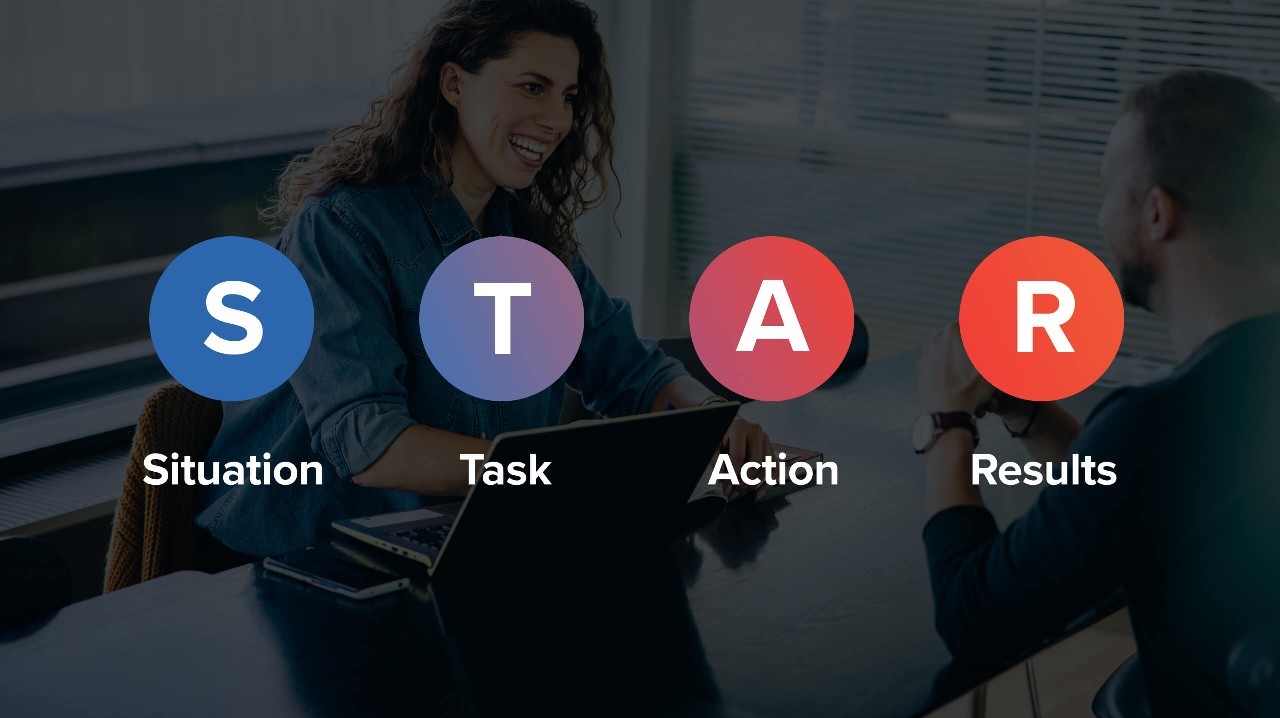
Mastering the STAR method will help you no matter where you interview. The STAR method is a highly effective framework for answering behavioral interview questions. Structuring your responses to highlight your accomplishments by explaining the Situation, Task, Action, and Result of your work will help you fully explain your experience to an interviewer.
Situation: Briefly set the scene.
Task: Clearly state your role and goal.
Action: Describe the steps you took.
Result: Share the positive outcome and what you learned.
"Clear structure turns a basic answer into an unforgettable story. Break your experience into Situation, Task, Action, and Result."
— Ali Gibson, Senior Manager of Talent Acquisition

"Tell me about a time you faced a significant challenge at work and how you overcame it."
This assesses your problem-solving skills and ability to handle adversity. We want to understand your thought process and what you learned from the experience.
“Describe a situation where you worked effectively with your team to achieve a shared goal.”
Collaboration is tied to success. We win together. This helps us understand your teamwork strengths and how you navigate group dynamics.
“Share a time you received constructive feedback that was difficult to hear. How did you respond?”
Your ability to receive and act on feedback is a significant contributor to personal and professional growth. This explores your openness to feedback and your drive for continuous learning.
“Describe a time when you had to adapt to significant changes in your work environment or responsibilities”
We seek candidates who are adaptable and embrace new challenges with a positive attitude. We want to see how you navigate change and maintain effectiveness.
“Tell me about when you’ve had a difficult working relationship. How did you navigate this dynamic?”
We understand friction can happen in the workplace. This question is to evaluate your conflict resolution skills and your professional maturity.
Curious how to answer these questions more in depth for your EchoStar interview?
Check out our sample responses!
Hiring managers often look for the options you faced, if there were any tradeoffs, and what decisions were made. Prepare specific examples that demonstrate your skills and how they align to the job description.
Situation
(10% of your answer)
Help the interviewer understand the background of your example. Some information to include may be:
What the project encompassed
Who you were working with
Task
(10% of your answer)
Explain your responsibilities in this situation and how you were involved. Were you:
Managing the project?
A stakeholder?
Action
(60% of your answer)
What did you do to make an impact? Describe the steps you took to address the task and reach a solution. Did you:
Create a new process?
Provide direct support?
Coordinate a new leadership business case?
Result
(20% of your answer)
Share the outcome and the impact of your action. An outcome summary provides a tangible example of the potential results you can drive on our team. Include:
Data, statistics, or percentages that measure the impact
Your key takeaways from this experience and how you apply these insights today
Avoiding these errors will keep your STAR responses concise and impactful.
Oversharing the situation: Spending too much time on background context. Condense context into a single, punchy sentence.
Vague ownership: Using “we” instead of highlighting personal contributions.
Generic explanation: Sharing general achievements rather than specific ones that mirror the core responsibilities of the role.
Lacking strategic reasoning: Explaining the actions you took without sharing the why behind your reasoning.
Skipping the impact: Leaving out tangible metrics, data changes, and lessons learned.
“Candidates often struggle by describing repeated processes, rather than specific events. To improve, focus on one distinct situation that directly leads to a measurable result.”
— Josh Zimmerman, Recruiter at EchoStar

Find desired traits in the job description and tailor your work experiences to align with these traits. Write down 5 to 6 stories from past work, school, or volunteer experiences that you can adapt to various questions. Practice your responses out loud to keep your answers concise, staying within 90 seconds to 2 minutes per story.
Using AI as an interview prep tool provides helpful guidance and feedback. When sharing the job description to an AI chatbot, you can better understand the key responsibilities of the role and ask for suggested STAR-focused stories for each responsibility. Ensure those stories are authentic to your experiences.
Mastering the STAR method will help you no matter where you interview. Structuring your examples this way clearly highlights your skills and experiences. The STAR method is a core part of the EchoStar interview process, and we use it to guide our daily work. Demonstrating clear thinking, problem solving, ownership, and impact helps you to stand out.